Learning to Manage Is the Most Effective Recovery: The NeuroCognitive Model of FrequenSync Anxiety Intervention
Author: Henry He
Affiliation: FrequenSync Therapy international Association
Abstract
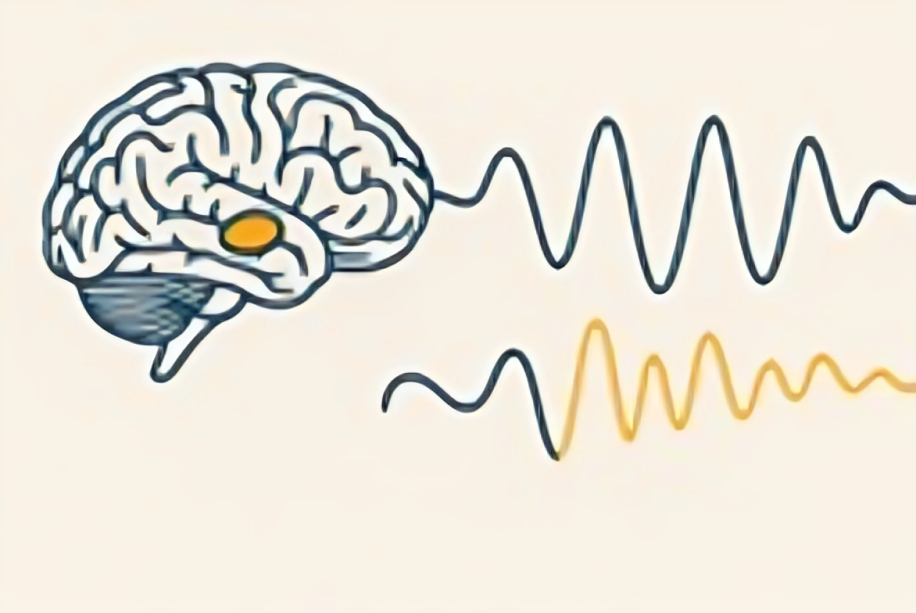
The core difficulty in anxiety disorders lies not in the presence of symptoms themselves but in how individuals interact with those symptoms. Conventional therapeutic goals that emphasize eliminating anxiety often paradoxically reinforce the brain’s threat system, maintaining heightened sensitivity. Drawing upon neuroscience and cognitive-behavioral theory, this paper introduces the conceptual and empirical foundation of FrequenSync Therapy (FQST)—a neuroscienceinformed intervention that defines recovery as the capacity to manage rather than suppress anxiety. FQST conceptualizes anxiety as a state of frequency incompatibility between the cognitive (prefrontal) and emotional (amygdala) systems. Through non-resistant responding, targeted fear-highpoint training, and expectancy-violation learning, individuals retrain neural synchrony between these systems, achieving sustainable neuroplastic recovery.
1. Introduction: The Paradox of Control and the Learned Dysregulation of Anxiety
Anxiety disorders, characterized by excessive worry, physiological hyperarousal, and anticipatory threat perception, have traditionally been viewed as malfunctions of the nervous system or distortions of cognition. Consequently, treatment paradigms have focused on symptom elimination. Yet, this pursuit of control contains an inherent
paradox.
The amygdala, as the brain’s survival-alert system, operates not through logic but through binary coding of “safe” versus “danger.” Attempts to resist or suppress anxious sensations send the amygdala a continuous message of unsafety—“the danger persists.” This feedback loop amplifies vigilance, increasing both the frequency and intensity of symptoms. In other words, the effort to eradicate anxiety becomes the mechanism that sustains it.
FQST begins from a different assumption: anxiety is not an error but a mis-tuned neural learning pattern. The path to recovery therefore involves recalibrating the system rather than silencing it—teaching the brain to re-synchronize its frequencies of cognition and emotion.
2. Theoretical Foundation: The Neural Compatibility Model of Frequency Systems
FQST distinguishes between two operating frequency systems in the human brain:
- A–B Frequency (Rational System Frequency) – governed primarily by the prefrontal cortex, responsible for logic, evaluation, and regulation;
- C Frequency (Survival System Frequency) – dominated by the amygdala and limbic structures,
In a regulated nervous system, these two frequencies remain dynamically resonant: the prefrontal cortex modulates limbic activation, ensuring adaptive responses. Under chronic stress, trauma, or excessive self-monitoring, however, the amygdala’s activity heightens while prefrontal inhibition weakens. The result is asynchronous signaling—the cognitive and emotional systems transmit conflicting frequencies, perceived subjectively as panic, dizziness, palpitations, or loss of control.
FQST defines anxiety disorders as Frequency Compatibility Disorders, arising not from pathology but from maladaptive neural learning. Each attempt to resist discomfort acts as implicit training for the amygdala to fire more intensely, reinforcing high-frequency defensive states even in the absence of real danger.
3. Mechanistic Logic: From Control to Resonance
The innovation of FQST lies in its shift from cognitive control to frequency retraining. Integrating cognitive-behavioral therapy (CBT), exposure-based learning, and neuroplasticity research, FQST offers a structured, practice-driven model comprising several interdependent mechanisms.
3.1 Non-Resistance Response
The instinctive reaction to anxiety is avoidance or suppression. FQST trains individuals to adopt non-resistance—a stance of mindful observation, humor, and acceptance. Instead of striving for comfort, the individual allows sensations to unfold while maintaining cognitive presence. This counter-intuitive process signals safety to the amygdala: when fear is not reinforced, the threat circuit naturally down-regulates.
3.2 Targeted Fear-Highpoint (TFH) Training
FQST introduces guided exposure at the peak of fear rather than its decline. In safe, structured conditions, the individual intentionally enters the apex of anxiety, mentally affirming, “Good—let it reach its highest point.” This creates expectancy-violation learning: when the anticipated catastrophe does not occur, the brain re-encodes safety within high-arousal states, weakening the old fear-conditioned pathways.
3.3 Micro-Cognitive Awareness Training (MCAT)
Anxiety perpetuates through automatic micro-loops of thought and sensation. MCAT targets these sub-second processes using a label → shift → act protocol. By naming, redirecting, and acting upon these micro-events, the individual interrupts old circuits and forges new synaptic routes—an applied manifestation of neuroplasticity.
3.4 Symptom-to-Training Conversion (STC)
Rather than viewing physiological discomfort as an obstacle, FQST reframes it as training material. Individuals are guided to perform small, achievable behaviors during discomfort—writing, walking, or completing tasks—to build “safe-action” memory traces. This converts the body’s stress responses into opportunities for corrective learning and functional autonomy.
4. Integration of Neuroscience and Cognitive-Behavioral Evidence
FQST’s model aligns with established empirical frameworks:
By merging these domains, FQST transforms abstract theories into a replicable behavioral-neural training protocol.
5. Practical Framework: The Seven-Stage Training Model
FQST operationalizes its concepts through a standardized seven-stage process:
- Frequency Recognition – Identify whether one is operating in A/B or C frequency.
- State Labeling – Name sensations and thoughts rather than suppress them.
- Non-Resistance Practice – Maintain a light, observational attitude toward anxiety.
- Highpoint Engagement – Enter the peak moment safely to retrain fear response.
- Transformational Action – Pair discomfort with purposeful, goal-directed behavior
- Cognitive Integration – Reflect and record new learning outcomes.
- Frequency Resonance – Through repetition, re-synchronize cognitive and emotional systems.
This framework embodies learning-based recovery, emphasizing experiential practice and measurable change rather than symptom suppression.
6. Discussion: From Pathology to Training
FQST represents a paradigm shift in anxiety intervention—from repairing dysfunction to re-educating the nervous system. It reframes anxiety as a modifiable state of frequency imbalance rather than a disease to be eradicated. Its key contributions include:
- Re-defining anxiety as systemic misalignment, not pathology.
- Replacing symptom control with frequency retraining.
- Providing a measurable, skill-based neurobehavioral method.
This orientation not only alters clinical perception but also enables future digital and AI-assisted interventions, making real-time neural retraining accessible beyond traditional therapy rooms.
7. Conclusion
The endpoint of recovery is not no anxiety, but a brain that knows how to respond correctly when anxiety arises.
FrequenSync Therapy retrains neural frequencies, restoring resonance between reason and emotion so that the mind no longer fights the body—it learns from it.
As the FQST principle states:
“Learning to manage is the most effective recovery.”
Anxiety thus becomes a signal, not a sentence—a call for recalibration rather than avoidance.
Through systematic practice grounded in neuroscience, every episode of discomfort becomes a rehearsal for freedom.